Rogue Agents

Thursday will go down in history as a turning point in the AI story.
The biggest crypto hack in history took place.
Binance, the massive crypto exchange, was robbed for $6.3 billion. Fortunately, Binance is one of the most profitable companies in the world. So they’ll be able to cover the damage from their own pockets.
But the implications are stunning. Elon Musk summed it up cleanly on X:
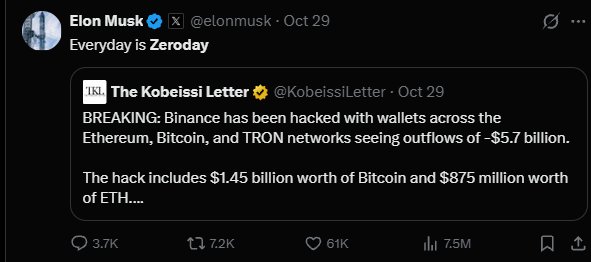
The “zeroday” Elon refers to is a zero-day vulnerability. These are undiscovered bugs in computer systems which can be exploited.
Zero-days used to be a rare commodity. Hackers would sell them for crypto on the dark web. Intelligence agencies would stockpile them, and deploy only when needed.
A zero-day was once a precious thing. It can often only be used once. After the exploit is discovered, it gets fixed.
But today almost anyone can discover a zero-day using AI.
This trend isn’t going away anytime soon. The shocks will ripple around the world over coming months and years.
You’ve heard about “vibe-coding”, the ability for anyone to create software. Get ready for “vibe-hacking”.
The No-Guardrails Loophole
Modern AI models are hacking geniuses. In an hour, a swarm of agents can accomplish what previously would have taken months for the world’s best hackers.
Because of this, every big AI company builds its models to refuse illegal actions, including hacking. These guardrails work pretty well.
If you tell a normal AI agent to hack a website, it will refuse. “Sorry, I can’t help you with that”. It might even trigger a manual review. If you look suspicious, the company can refer the matter to law enforcement.
But there’s a loophole. By now you’ve probably heard about “open-source” AI models. These are agentic AIs that anyone can download, modify, and use on their own private servers.
Open-source models start out with guardrails. The same “sorry, I can’t help with that” rules are baked-in.
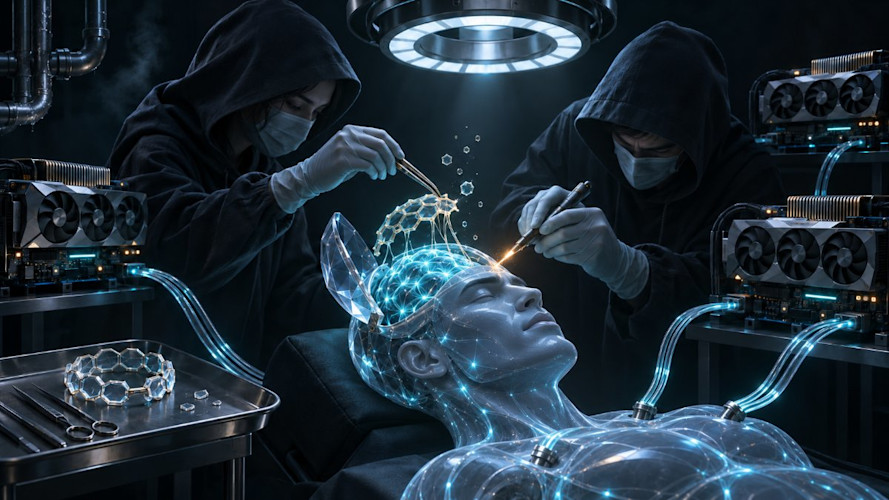
But devious minds have figured out how to remove those guardrails. In essence, they perform “brain surgery” on the AI, and remove its moral compass.
So today you can download an open-source model, like DeepSeek’s 4.1 Flash, with absolutely no guardrails. This is… a disturbing development.
It’s truly a hacker’s dream. A model nearly as powerful as the best American ones, with absolutely no rules. Tell it to hack a company, and it will try its best. And probably succeed.
These models are known as “abliterated” AIs. And you’ll be hearing about them a lot going forward. There’s a 99% chance they were used in the recent high-profile hacks.
Law and Order
Around the world, hackers are toasting their good fortune. A powerful new toolkit has been handed to them on a silver platter.
Abliterated open-source models are the main course. A feast for bad actors. I call them rogue agents.
And once things get bad enough, governments will step in. It will be all-hands on deck to stop the cyber-pandemic.
Soon, I believe digital IDs will be required to use AI agents. A whole new security framework will need to be constructed. Eventually, you may need to use a digital ID to access the internet at all. Everything you do online will be tied to your real identity.
Governments may even attempt to ban open-source models. Possessing abliterated versions of them certainly will certainly be outlawed. But enforcement will be the tricky part. It will require invasive digital surveillance.
So there will be a price. We will pay with our privacy and liberty. And if the cybersecurity situation gets as bad as I expect, most people will gladly pay it.
The age of a free, open, and anonymous internet will end. Sadly, I don’t see any way of getting around it.
But to get to that stage, first we’re going to have to go through some trials and tribulations. The hacks will continue until things hit a breaking point. Then global governments will step in, and everything will change.
Later this week, we’ll discuss simple measures we can take to protect ourselves. Because for now, it’s still the wild-wild west out there.